
2026 industry report
July 26, 2026
Open-Source vs. Proprietary Network Observability: 2026 Cost & Feature Comparison
Why the 2026 observability decision is about operational sovereignty, high-cardinality cost, edge lifecycle, and zero-trust—not only the license fee.
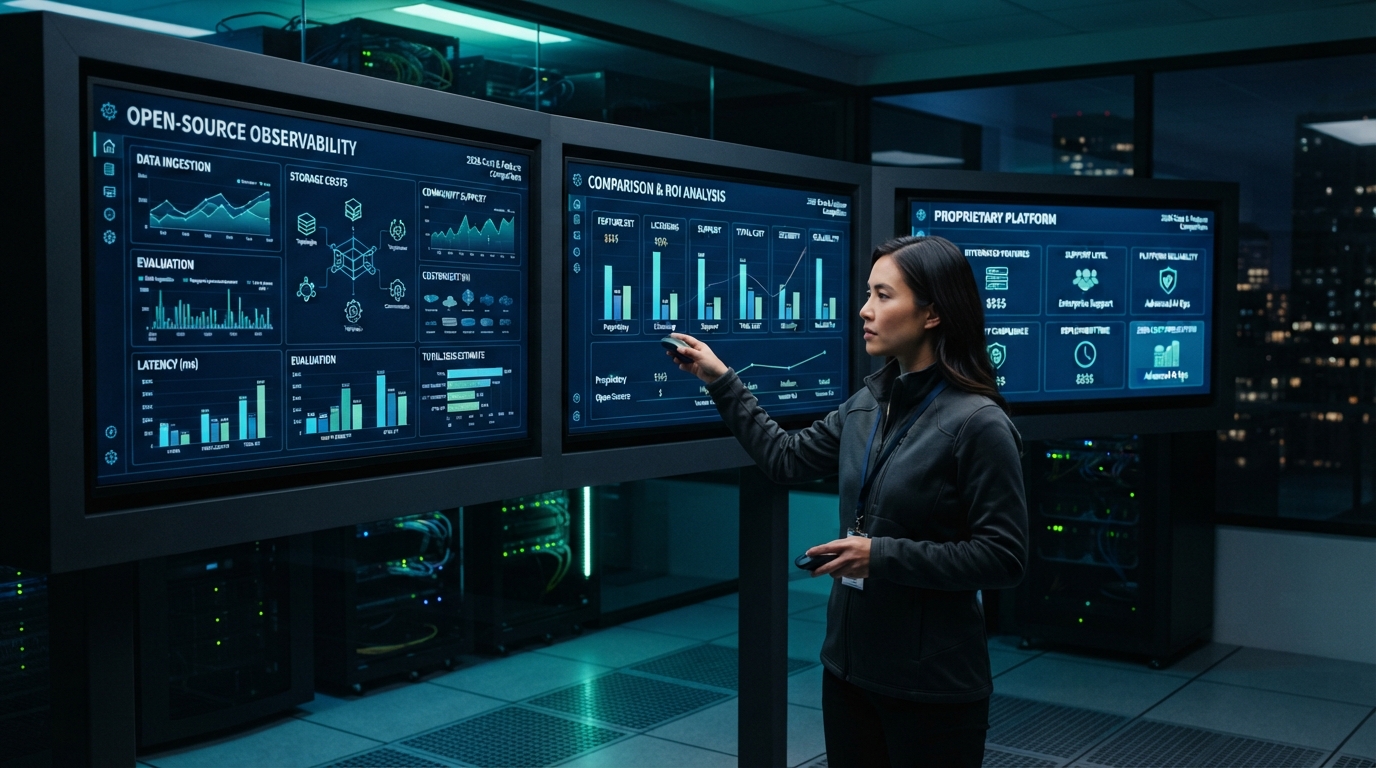
The 2026 observability landscape
As we move into 2026, the definition of network observability has shifted. It is no longer enough to simply collect logs and metrics. For teams managing critical infrastructure, observability now encompasses edge lifecycle management, physical asset discovery such as cameras and WiFi access points, and the ability to operate within strictly segmented or air-gapped environments.
The cost paradox of 2026 is that proprietary solutions promise ease of use, while the explosion of high-cardinality data from edge devices often drives unpredictable ingest-volume fees that outpace infrastructure budgets. Traditional open-source stacks often suffer from tool sprawl, requiring five different systems to achieve what a single unified platform should handle.
Comparison at a glance: ServiceRadar vs proprietary black box
| Feature / capability | Proprietary SaaS | ServiceRadar |
|---|---|---|
| Pricing model | Per-host, per-container, or ingest volume. High cardinality drives cost spikes. | Open-source core. No per-node licensing fees. Predictable TCO. |
| Deployment | Primarily cloud SaaS. Requires data to phone home. | Self-hosted or Cloud. Built for air-gapped and segmented environments. |
| Data transparency | Black-box logic. Proprietary agents with limited visibility. | Open, inspectable code. Full control over data residency. |
| Edge operations | Observability only (metrics and logs). Limited lifecycle management. | Unified discovery, camera ops, WiFi surveys, and edge lifecycle workflows. |
| Zero-trust support | Difficult in strictly isolated segments that cannot phone home. | Native support for segmented infrastructure and zero-trust workflows. |
| Integration | Vendor-specific ecosystems and lock-in risk. | Replaces tool sprawl by unifying discovery and telemetry in one interface. |
Total cost of ownership in 2026
For edge infrastructure management, proprietary pricing models are becoming hard to sustain. When you manage thousands of cameras or sensors, a per-device fee creates real pricing anxiety.
The proprietary trap
Complex tiers based on custom metrics or cardinality mean costs can jump when edge devices generate more unique data points. Proprietary agents also deepen lock-in: migration cost eventually exceeds the inflated license fees.
The ServiceRadar advantage
ServiceRadar is designed to replace tool sprawl for discovery, telemetry, and lifecycle management. Run the open-source platform on your infrastructure, drop per-node fees, and control storage costs for high device counts.
Why unified observability matters
1. Eliminating tool sprawl
Most operations teams still juggle a fragmented stack: one tool for network discovery, another for camera operations, a third for WiFi site surveys, and custom scripts for edge rollouts. ServiceRadar brings those jobs together so operators are not reconciling four partial views of the same environment.
2. Built for real-world segregation
Modern infrastructure, especially in utilities and transit, often runs in segmented or zero-trust environments. Proprietary SaaS tools struggle when they need a direct path to the public cloud. ServiceRadar is built for those environments: secure remote operations without giving up network security policy.
3. Edge lifecycle management
Black-box observability tools mostly tell you whether a device is up or down. ServiceRadar supports active management: rollout and upgrades of infrastructure at the edge, which is how teams keep security patches and operational efficiency current in 2026.

Pros and cons: choosing your path
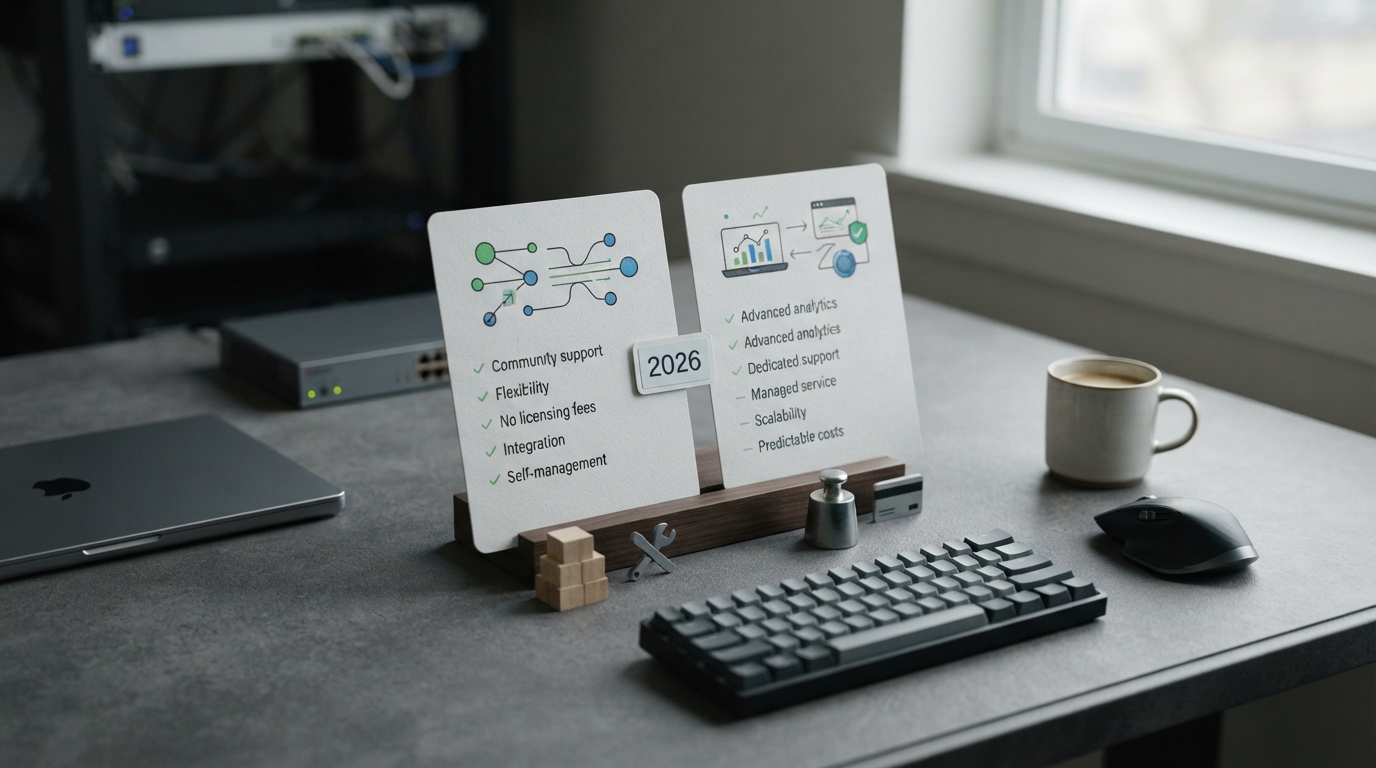
Open source
ServiceRadar
- Full data sovereignty, no vendor lock-in, inspectable code for security audits, unified edge workflows.
- Best for critical infrastructure, zero-trust environments, and large-scale edge deployments.
Proprietary
Black-box SaaS
- Faster initial setup for small environments, managed maintenance, hands-off backend operations.
- Best for small teams or non-critical office environments where data residency is not a concern.
Buyer guidance: when to choose ServiceRadar
Based on this 2026 analysis, ServiceRadar is the stronger fit when:
- Security and reliability matter. You need software you can inspect and run on your own infrastructure.
- You face tool sprawl. You are tired of reconciling discovery, camera, and WiFi telemetry across separate products.
- You operate at the edge. You manage physical infrastructure where change control and segmentation are mandatory.
- Cost stability is critical. You want to avoid ingest-based pricing that scales with cardinality.
Frequently asked questions
Is open-source observability actually cheaper in the long run?
Yes, especially for high device counts. OSS needs hosting capacity, but it removes unpredictable per-node and per-metric fees that drive proprietary overruns in 2026.
How does ServiceRadar handle zero-trust environments?
It is designed for segmented access. It does not require phoning home to a vendor cloud, so you can keep air-gapped or tightly controlled segments while retaining visibility and lifecycle control.
Can ServiceRadar manage physical hardware like cameras?
Yes. Unlike general-purpose observability tools, ServiceRadar includes workflows for camera operations and WiFi surveys aimed at physical edge infrastructure.
What is high cardinality and why does it affect cost?
Cardinality is the number of unique time-series or label combinations. As sensors and cameras emit unique IDs and metadata, proprietary vendors often charge more for that variety. ServiceRadar lets you manage the data on your own terms without licensing penalties.
Next step
Ready to unify your network operations?
Stop stitching together partial views of your environment. Try the public demo, or talk with us about open-source discovery and edge management for critical infrastructure.