
July 26, 2026
How to Bridge the Gap Between Field Workflows and Inventory Logs
Why inventory logs rot as soon as field techs leave the site, and how continuous discovery, edge telemetry, and lifecycle events keep one living system of record.
Sixty percent of inventory records contain inaccuracies serious enough to matter, according to research from ECR Retail Loss. That number should stop any operations lead cold, because it means the log your team trusts on Monday morning is already wrong before the first truck leaves the yard. Learning how to bridge the gap between field workflows and inventory logs is not a nice-to-have process improvement anymore. It is the difference between a network operations team that knows what it is managing and one that is guessing.
Key takeaways
- The gap is structural, not accidental. Field techs update paper, spreadsheets, or tribal knowledge faster than any centralized system can absorb it.
- Manual reconciliation is still the norm. A majority of warehouses and field operations run without integrated IT asset tracking, according to Kardex research.
- Discovery has to be continuous, not periodic. A quarterly audit is stale the moment it is saved. See network discovery and inventory for a living record instead.
- Telemetry closes the loop that spreadsheets cannot. Edge observability and telemetry means the log updates as conditions change.
- Field-specific workflows need field-specific tooling. Camera installs and WiFi surveys have different data shapes than server racks, and treating them the same breaks the log.
- Security cannot be an afterthought. Edge lifecycle management ties zero-trust identity to every device the moment it is discovered.
- Deployment model matters. Whether you run self-managed open source or a hosted Cloud deployment , the goal is the same: one inventory, one truth.
Why field workflows and inventory logs keep drifting apart
Here is the problem, stated plainly: field workflows happen in the physical world, and inventory logs live in a database somewhere else. Every gap between those two places is an opportunity for the data to rot.
A tech swaps a switch on a Tuesday. The ticket gets closed. The inventory log does not know the switch changed until someone remembers to update it, if they ever do.
Kardex found that 63% of warehouses are still fully manual. That statistic explains a lot about why process know-how lives in someone's head rather than in a system anyone else can query.
The same pattern shows up in IT asset management across data centers, branch offices, and field sites. Spreadsheets and sticky notes do not scale, and neither does hoping the person who racked the gear three years ago still works there.
Bridge the gap with continuous discovery
The fastest way to close the gap is to stop treating discovery as a project and start treating it as a background process. That is the premise behind network discovery and inventory : keep an accurate, living inventory of what is on the network without stitching together scanners, spreadsheets, and tribal knowledge.
We have written before about what happens when discovery is slow. Our network discovery workflow used to take longer than a transatlantic flight, and nobody trusts an inventory log that is 19 hours behind reality.
Internally, we challenged ourselves to deliver near-real-time visibility, and the result is a Go-powered SYN scanner that now finishes the same job in under one second. That is the difference between an inventory log that reflects the network right now and one that reflects what the network looked like yesterday afternoon.
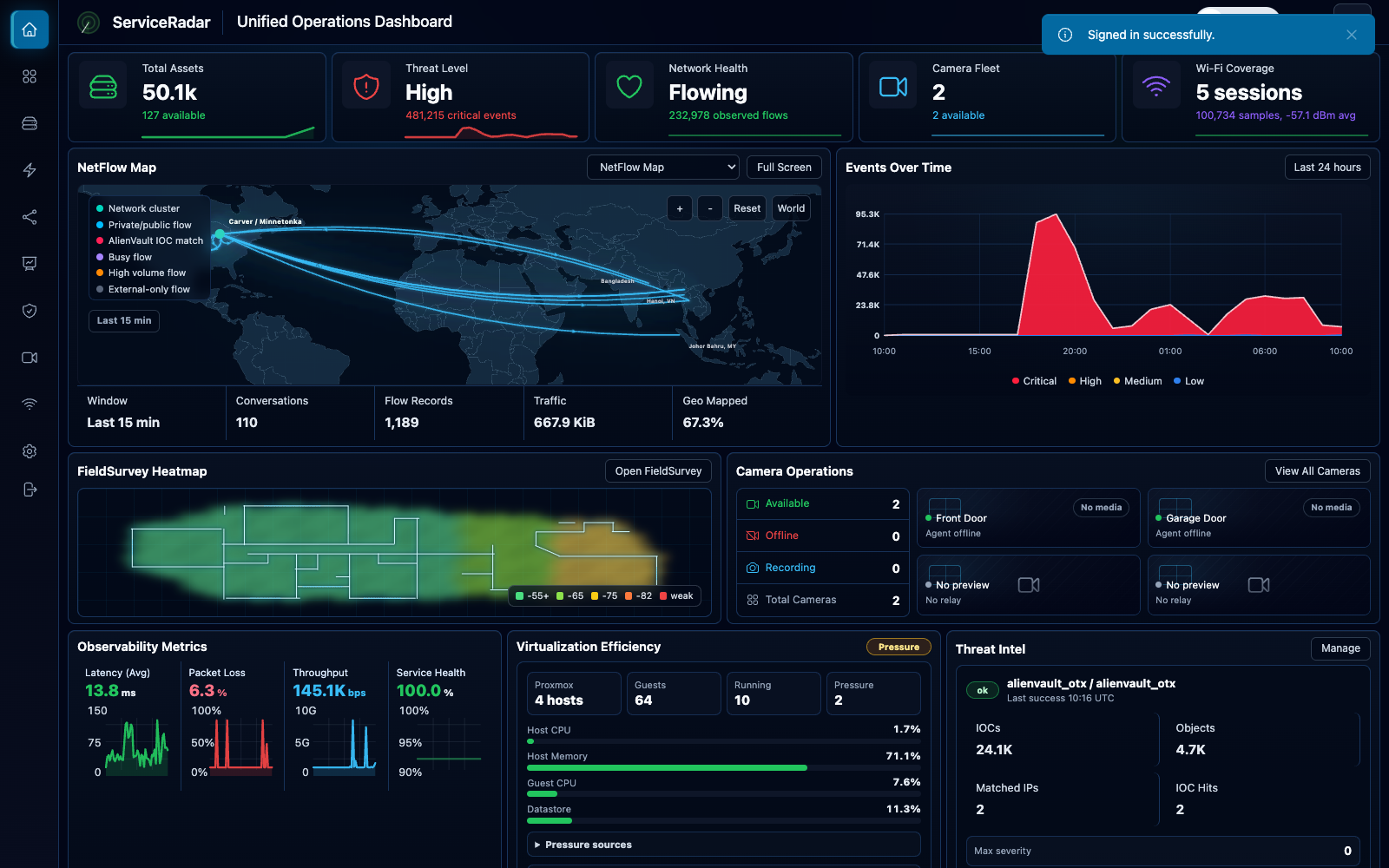
Speed matters because IT asset discovery is not a one-time event. Devices join and leave networks constantly, especially at branch and edge sites where field teams are the ones physically touching hardware.
Any IT asset discovery tool worth deploying has to run this fast, or it will always be playing catch-up with the field.
Closing the loop with edge observability and telemetry
Discovery tells you what exists. Observability tells you what is happening to it right now, and that is the second half of bridging the gap.
Edge observability and telemetry brings OTLP, traps, NetFlow, and related telemetry into one operational workflow so edge sites stop becoming black boxes.
If nobody at headquarters can see telemetry from a remote gateway, the inventory record for that device is a static guess, updated only when someone remembers to file a ticket.
ServiceRadar agents run on everything from beefy EPYC servers to tiny ARM-based edge gateways, and that hardware diversity is why the telemetry pipeline has to be lightweight and cross-compile friendly. A monitoring agent that cannot run on the actual edge hardware in the field is useless for closing this gap.
Camera and WiFi field operations: where physical meets digital
Not every field asset looks like a router. Cameras and WiFi access points get installed by teams who are thinking about coverage and cabling, not inventory schemas.
That is why camera and WiFi field operations support those workflows in the same platform that already owns inventory and edge lifecycle management.
Running a separate system for camera installs and a separate one for network inventory guarantees a gap. The techs doing WiFi surveys should not have to log into three different tools to make sure their work shows up in the master record.
Consolidating these workflows into one platform is one of the clearest examples of what bridging the gap looks like in practice, rather than as a slide in a vendor deck.
NetFlow analytics: verifying what is actually on the network
Discovery and telemetry tell you about devices. NetFlow tells you about behavior, and behavior is often the tiebreaker when a log and reality disagree.
NetFlow analytics and flow intelligence ingests NetFlow, sFlow, and IPFIX; attributes conversations to processes, containers, and Kubernetes workloads; enriches with ASN, GeoIP, and prefix tags; correlates flows against threat-intelligence IOCs; and lets you investigate it all with SRQL.
If a device is generating traffic but does not appear in your inventory log, that is not a rounding error. That is shadow IT, an unlogged field deployment, or worse.
Flow data is the cross-check that catches what discovery alone might miss, particularly for devices behind NAT or in segments that do not respond cleanly to sweeps.
Edge lifecycle management and zero-trust for field assets
Once a device is discovered and its telemetry is flowing, someone has to be responsible for it over time. That is the job of edge lifecycle management : lifecycle management for edge devices with security integration, secured with zero-trust principles across segmented environments.
Every device gets a real identity the moment it is discovered, verified over mTLS rather than trusted by default because it happens to sit on the right subnet.
This matters for inventory logs because lifecycle events (provisioning, OTA updates, decommissioning) are exactly the moments when logs typically fall out of sync with the field. If an edge gateway is decommissioned in the field but never marked retired in the log, you have a phantom asset that still looks active to auditors and still counts against license totals.
An admin approving a firmware push or an OTA update should trigger the same event that updates the inventory record. Anything less reintroduces the gap you just closed.
IT asset management practices that keep field data and logs aligned
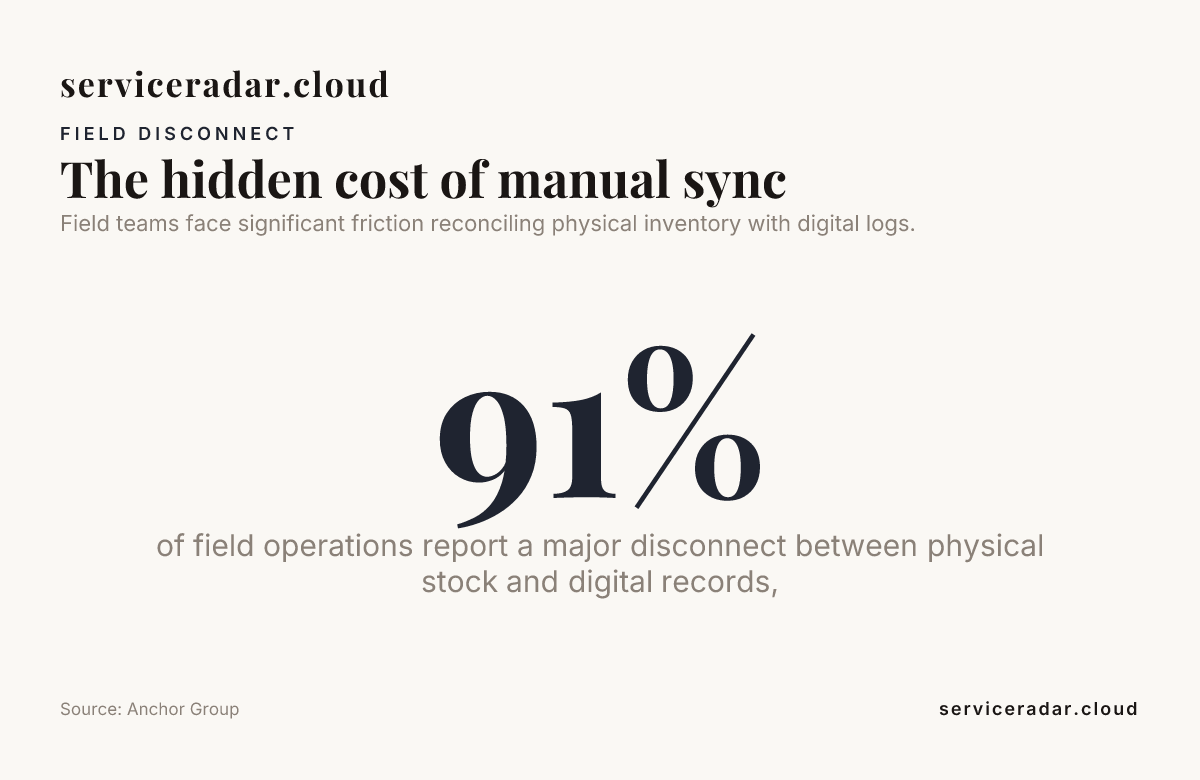
Ninety-one percent of companies optimize inventory through ERP workflows, according to Anchor Group research, and that is usually where the record of truth lives for finance and procurement. The problem is that ERP systems are rarely built to ingest live field telemetry.
This is where a lot of IT asset management programs quietly fail. The system of record (whether that is an ERP module, a CMDB, or a spreadsheet someone inherited) only knows what people type into it.
Good IT asset management best practices treat discovery, telemetry, and lifecycle events as inputs that feed the system of record automatically, rather than depending on a human to transcribe field notes after the fact. Organizations that implement this kind of workflow automation report an 88% increase in data accuracy, per the same Anchor Group data.
A few practices worth adopting regardless of platform:
- Run discovery continuously, not on a quarterly audit cycle.
- Pipe telemetry into the same system that holds inventory, not a separate monitoring silo.
- Trigger inventory updates automatically from lifecycle events like provisioning and decommissioning.
- Give field techs one tool for camera, WiFi, and network work instead of three.
- Treat NetFlow and traffic data as a verification layer against the inventory log.
Where ServiceNow, SAP, and Maximo fit
Most enterprises already run some form of asset management system for procurement, licensing, and financial reporting. ServiceNow IT asset management, SAP asset modules, and IBM Maximo are common systems of record, and they are good at what they do: tracking ownership, cost, and contract lifecycle.
What they are generally not built for is real-time field discovery. A ServiceNow CMDB entry does not update itself when a tech swaps a camera in the field, and an SAP asset record does not know a WiFi access point moved to a different closet last week.
That is the layer ServiceRadar is built to fill: continuous network discovery and edge telemetry that feeds accurate, current data upstream into whatever IT asset management solution your finance and compliance teams already depend on. Rather than replacing your enterprise system, the goal is to make sure the data flowing into it reflects what is actually deployed, not what was true at the last audit.
Choosing between self-managed and hosted deployment
Bridging the gap also means choosing a deployment model your team can maintain. ServiceRadar offers two paths, and neither one is the right answer for every organization.
Self-managed open source is the right call for teams with strict data residency requirements or existing infrastructure they would rather not abandon.
Hosted ServiceRadar Cloud is the faster path for teams that would rather not run their own Postgres cluster and message broker just to get an accurate inventory log.
Either way, we built the underlying stack to be portable across environments. Our shift toward Elixir, Rust, and CloudNativePG on the backend was explicitly about going from fragmented to fluid, consolidating scattered services into a platform operations teams do not have to babysit.
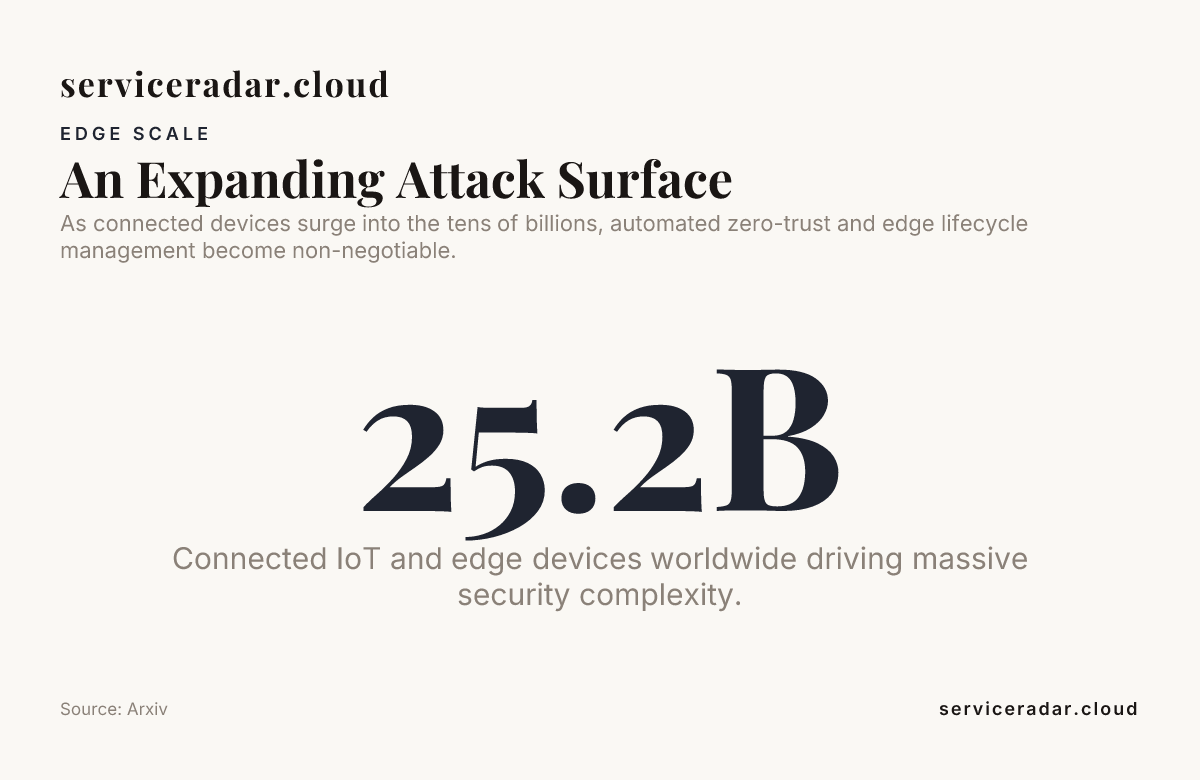
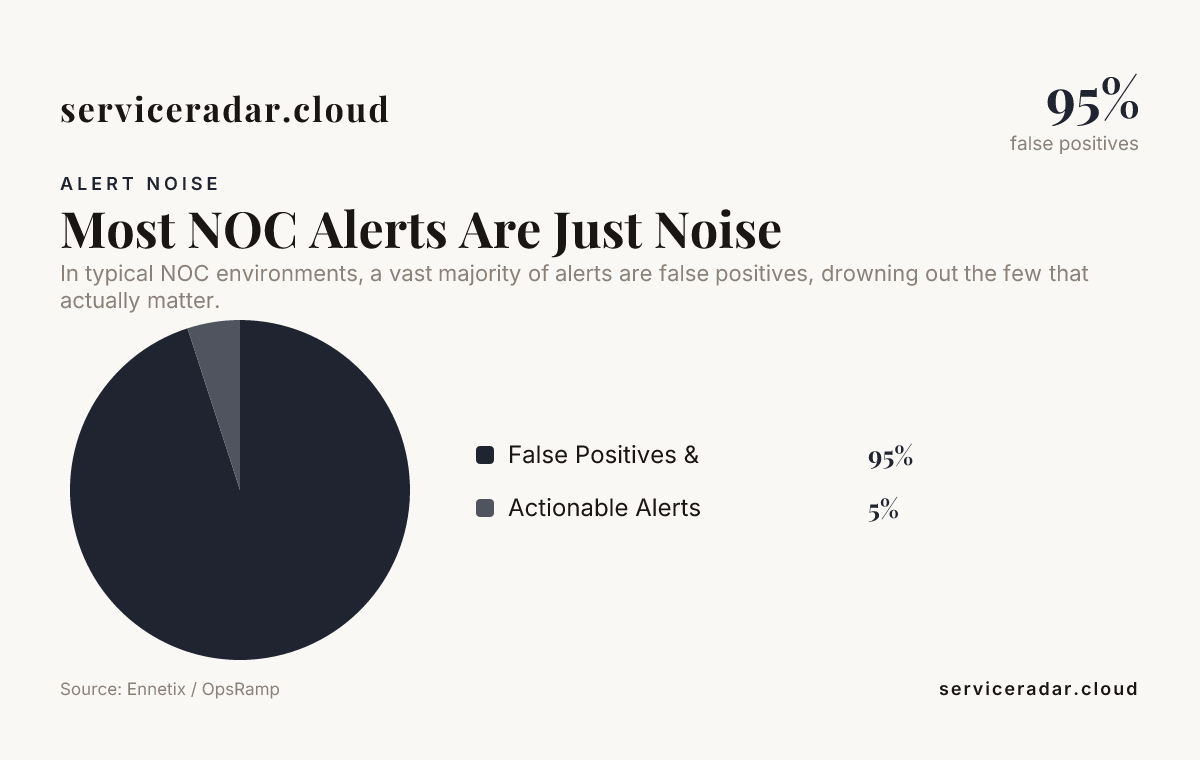
Extending the platform: plugins built for field data
Every field environment eventually needs a custom integration, whether that is a proprietary camera protocol or a legacy SNMP device nobody documented properly. Running untrusted code safely is a solved problem if you are willing to use WebAssembly.
We built our plugin system on Wazero so custom field integrations do not have to compromise security to get data into the inventory log. This is the opposite of a traditional scripting runtime where you carefully deny access to dangerous APIs.
An admin must explicitly approve the capabilities requested by the plugin, for example "this plugin wants to talk to a specific device endpoint on port 443." Nothing runs until it is granted, which means field teams can build custom connectors for oddball hardware without opening a security hole.
To keep custom plugins first-class, we adopted a Nagios-style result schema for status and a separate first-class telemetry path for metrics. That is the kind of detail that keeps a plugin ecosystem from turning into its own fragmented mess.
Frequently asked questions
What does it mean to bridge the gap between field workflows and inventory logs?
It means making sure the physical reality of what is deployed in the field, from switches to cameras to edge gateways, matches what your inventory log says exists. That requires continuous discovery and telemetry rather than periodic manual audits.
Why do inventory logs become inaccurate so quickly?
Field changes happen faster than manual updates can keep up, and a large share of warehouses and field operations still rely on manual processes. Research shows the majority of inventory records contain inaccuracies at any given time.
Is IT asset management software worth it in 2026?
Yes, especially as edge deployments and remote field sites multiply. A modern tool that combines continuous discovery with telemetry pays for itself by catching phantom assets, unlogged devices, and stale records before they become audit findings.
How is ServiceRadar different from ServiceNow or SAP asset management?
ServiceNow and SAP asset modules are systems of record built for procurement and financial tracking, not real-time field discovery. ServiceRadar focuses on continuous network discovery and edge telemetry that feeds accurate data into those systems rather than replacing them.
Can small IT teams bridge this gap without a big enterprise budget?
Yes. Self-managed open source deployment lets smaller teams run the same discovery and telemetry stack on their own infrastructure without licensing a full enterprise ITAM suite.
What is the biggest mistake teams make when syncing field data with inventory logs?
Treating discovery as a periodic project instead of a continuous process. A quarterly scan is already stale by the time it is reviewed, which is why sub-second discovery and always-on telemetry matter more than a bigger spreadsheet.
Does bridging field workflows and inventory logs help with security, not just accuracy?
Absolutely. An unlogged device is also an unmanaged device, and edge lifecycle management with zero-trust identity closes both the accuracy gap and the security gap at the same time.
Conclusion
Bridging the gap between field workflows and inventory logs is not about buying one more dashboard. It is about rebuilding the pipeline so discovery, telemetry, and lifecycle events feed the log automatically instead of depending on someone remembering to update a spreadsheet.
We built ServiceRadar around that principle: sub-second discovery, continuous edge observability, and a capability-based plugin system that lets field teams extend the platform without introducing risk. Whether you deploy it self-managed or hosted, the outcome is the same: an inventory log that actually matches what is in the field, checked in real time rather than at the next scheduled audit.
Start with the quickstart guide if you want to see how fast that gap closes in practice.
Next step
Ready for an inventory log that matches the field?
Talk through continuous discovery, edge telemetry, and field workflows with our team, or try the public demo while Cloud signup is still coming soon.